



Fulbright alumni spotlight: Ilyaas Sherally
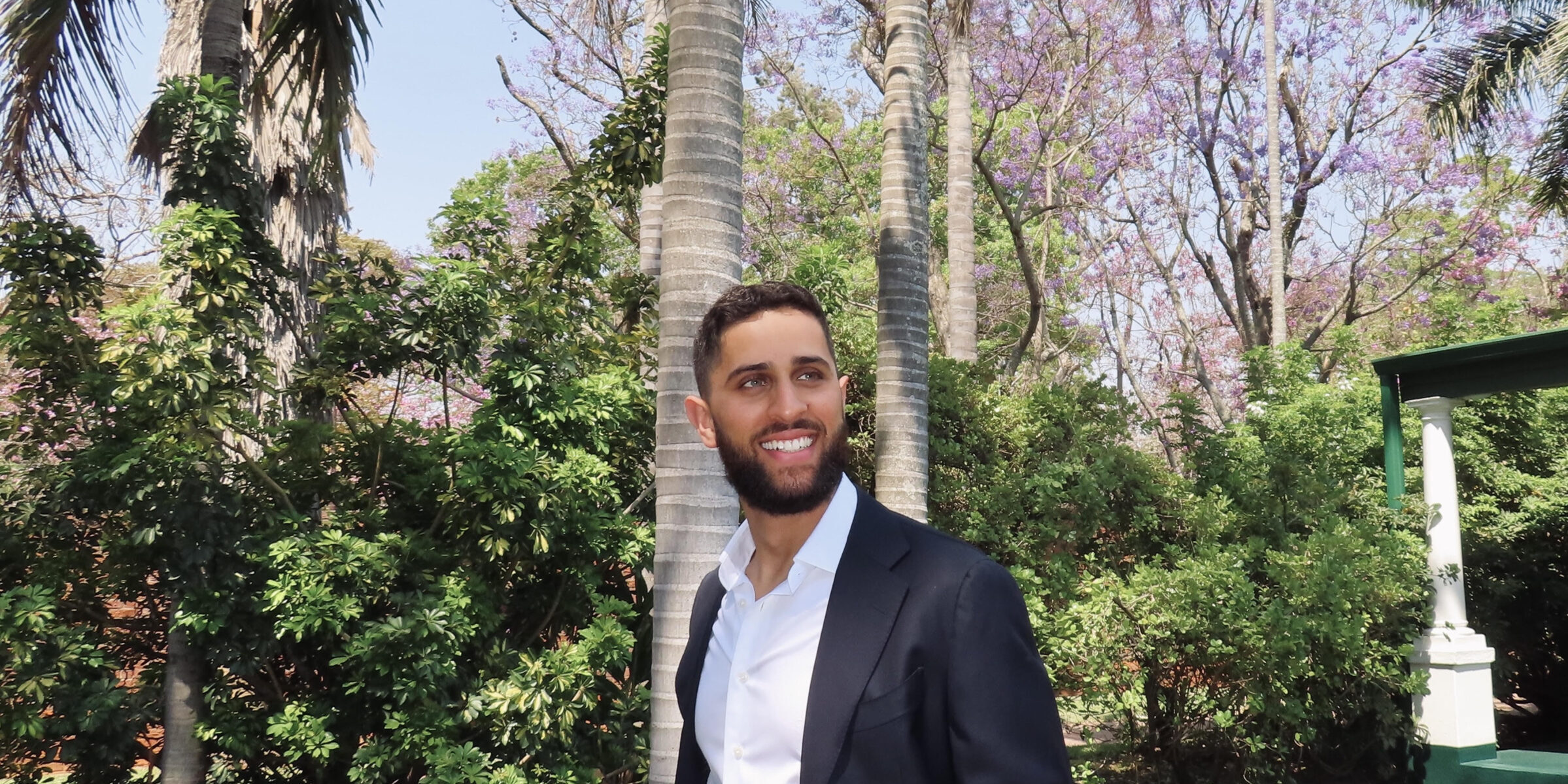
For the October edition of Fulbright Netherlands’ alumni newsletter, we interviewed Dutch Fulbright alum Ilyaas Sherally (Fulbright-NAF graduate student, Columbia University, 2018-2019), currently deputy Ambassador to Zimbabwe for the Dutch Ministry of Foreign Affairs, about the field he works in, his projects, and how his Fulbright grant impacted his life and career. Read the full interview below.
Could you briefly introduce yourself?
I know this may go against the standard start of an interview, but I want to admit that I feel a certain unease in speaking about myself in these times – which is something we discussed openly. We are all aware of the genocide happening in Gaza, which we are witnessing in real time, enabled and sustained by global complicity. And so I want to make my discomfort and vulnerability explicit, for what it’s worth, while also recognizing the importance of sharing experiences, insights, and perspectives that could be valuable to others, in this case to students and fellow Fulbrighters and alumni.
Now on to actually answering your question.. I am Ilyaas Sherally, a 30-year-old Dutch-Tanzanian. I grew up speaking Dutch, English, and Swahili, and later also learned Arabic. My mother is from the Netherlands, and my father is Tanzanian, which is also where I was born and raised. Over the years, I’ve had the chance to live in several countries, including the Netherlands, Jordan, Palestine, the US, and Qatar.
Currently, I work for the Dutch Ministry of Foreign Affairs as Deputy Ambassador to Zimbabwe, Zambia, and Malawi, based in Harare. I completed my bachelor’s degree at Leiden University College in The Hague and earned my graduate degree at Columbia University in New York as a Fulbright scholar in 2018-2019.
What did you study at Columbia University and why did you choose that program specifically?
I pursued a M.A. program in ‘Global Thought’ at the Graduate School of Arts and Sciences, specializing in political theology and international diplomacy. At the time, I remember looking for a graduate program that would provide me with the academic freedom to combine, as well as fine tune, my diverse academic and professional interests. Ultimately, I was searching for a program that was interdisciplinary in nature, flexible in its curriculum and student-centred in its approach. Given my own international background, I also attached great value to the international mix of students within the program. At the time, the program really provided a unique combination of world-class scholarly depth, drawn from across the different schools within Columbia University, and a cutting-edge and globally conscious curriculum that capitalised on its location in the city of New York.
How did you find living in New York?
Absolutely fantastic, and although expensive as a student, I had an amazing time! And the cliches are true, it really is a vibrant and cosmopolitan city. I never experienced a dull moment, explored all its hidden gems, and tried to maximize my time there to the fullest. And at the end of the day, the people make the place, so I am grateful for the many friends and contacts I made during my time in New York.
What did you do immediately after graduating?
Immediately after graduating? I actually turned around to one of my close friends who had flown in to visit me and said: shall we climb Mount Kilimanjaro to celebrate? And a few weeks later we were actually in Tanzania climbing it. Looking back, I am not sure whether it was a celebration or just my way of avoiding job applications.
I also doubted whether I should stay in the US for another year and look for opportunities, as permitted under the visa regulations for academic training. So I did end up having some conversations with consultancy firms, investment banks and international NGOs in the US. Eventually I decided it was better to close the chapter of being a student and to move on elsewhere. So I went back to the Netherlands, which was home in many ways, and started reconnecting with old colleagues from previous work experiences, as well as networks that I had built during my studies. A friend of mine at the Dutch Ministry of Foreign Affairs then drew my attention to a few opportunities at the ministry, which I was interested in at the time, having previously worked for the Dutch in Ramallah, Palestine.
As I was applying I could not sit still, however, in part because my parents taught me to always be working. So as I was applying and awaiting answers, I actually worked in a factory in the ‘Achterhoek’, which is the east of the Netherlands. I was doing morning, afternoon and night shifts. It was hands-on and intense physical work, which was actually a much-needed break from the academic world I just came out of. I was also working with many Syrian refugees, which was excellent for their Dutch and even more for my own Arabic.
So now you are working at a Dutch Embassy abroad. Could you use any of your studies in your current job?
Yes, I do think so. I may not always apply the knowledge from my studies directly in my day-to-day work, but my studies have definitely, in part, shaped the way I think, approach questions, issues and challenges, present, write, and so on.
Also, I believe the holistic and interdisciplinary approach of both my bachelor and master degrees prepared me well for my current job as a diplomat. Needless to say, diplomacy is not a one-dimensional exercise and my studies deepened my understanding on the intricate processes and debates that shape today’s contemporary world. And one last thing perhaps, the network built during my studies has proven valuable and is something I definitely use in my current job.
How do you keep in touch with home and where is home for you now?
The concept of home is always an interesting one, but I consider home to be the place where I (meta)physically am. So currently Harare is home, however, depending on where I was at the time, Mwanza, Angerlo, Amman, the Hague, Ramallah, New York, Doha and Washington D.C. were all once home. Of course family plays a big role in what is considered home, and in that sense both the Netherlands and Tanzania will always be home for me as well. Luckily with technology it is easy to stay in touch with family and friends and I am privileged to be able to visit the people I love frequently.
How do you like living and working in (sometimes very) different cultures?
A true enrichment and privilege. The ability to live and work in many places and interact with a diversity of people was also one of the reasons I was interested in diplomacy. My international background has also allowed me to navigate and connect effortlessly between diverse, and sometimes clashing, cultures and worlds.
What would you advise other students who want to have a career like you, working for the Ministry of Foreign Affairs?
Oh, the classic question! And to be honest, advice is always tough. Of course the ‘correct’ answer is to tell students to explore through internships, build useful networks and contacts, and have a natural interest in what is happening around them. And this is all true and important advice. But we live in bizarre times, so take it easy. Take your time to think critically on how you can actually make this world a better place, in the real sense of it, as that is much needed at the moment. And remember: no job pursuit is ever the ‘be-all end-all’.