



Could you briefly introduce yourself?
I am Demy Donkervoort. I’m a 25-year-old recent graduate of the Master’s program of Biomedical Sciences at Maastricht University, and last year I had the amazing opportunity to do my master’s internship at Cincinnati Children’s Hospital in Ohio, which was funded by the NAF-Fulbright Heersink Grant.
What was your research at Cincinnati Children’s hospital on?
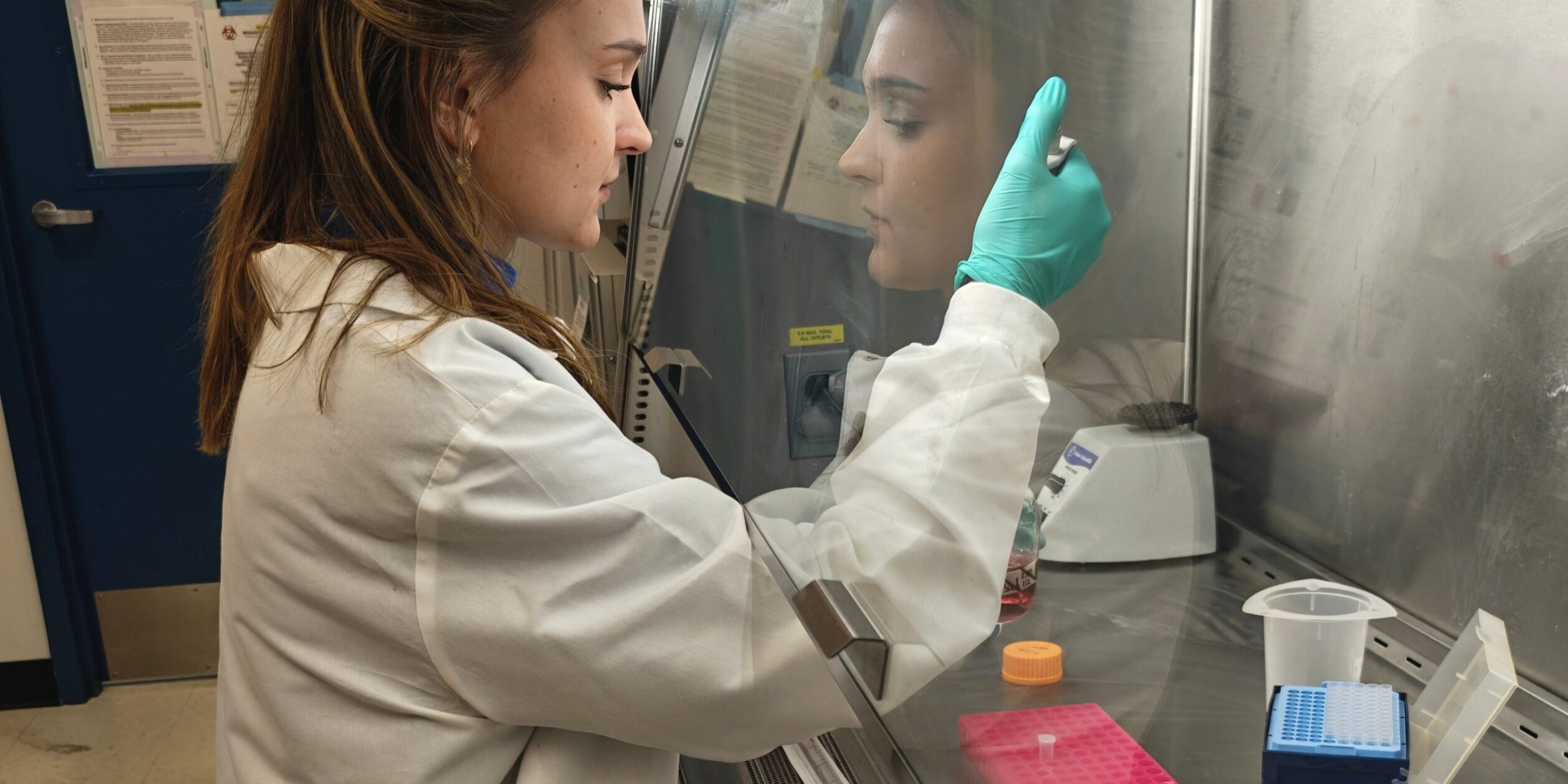
The lab that I joined for my 10-month internship was led by Dr. Tilburgs, and we did research in reproductive immunology, specifically how the immune system adapts in pregnancy. This is a very interesting area because the fetus’s DNA is half paternal, meaning that the maternal immune system could recognize this as foreign. But this is not the case. In a healthy pregnancy, the fetus is not rejected. However, there are a lot of knowledge gaps on the inner workings of this tolerance. My research focused on one type of immune cell, CD8 T cells, which are normally “killer” cells. But what we observe is that once these cells are present in the placenta, their killing ability seems to be dialed down, likely to protect the baby. In short, a healthy pregnancy therefore has a very dynamic balance between protecting the baby as well as retaining the ability to fight off infections. Doing more research in this area is important because it also helps us explain when this specific balance breaks down in pregnancy complications and how we can develop more targeted therapies to target these.
How did you connect with the Cincinnati Children’s Hospital for your research?
I actually got into contact with my supervisor at Cincinnati Children’s Hospital through a previous teacher from my bachelor studies. I immediately had a very nice connection with her. She supported me in coming to do my internship there, as well as throughout my time there, really emphasizing on letting me grow as a scientist. For example, she gave me the opportunity to present a poster at the American Society of Reproductive Immunology conference. I was really glad that I chose to go there.
How did you find living in Cincinnati, Ohio? Any big culture shocks?
I think my first culture shock was when my roommate picked me up from the airport. I hadn’t even unpacked my bags yet. We were driving on the highway, and there were these massive trucks that overtook us on both sides. And I had never been to the US before, so this just stays in my mind the whole time, because it took me off guard so much.
But besides that, I think Cincinnati was a great city. I experienced it as a really warm and welcoming atmosphere. And academically, I noticed that the lab culture was very diverse but also immensely supportive and fast-paced. There was a lot of discussion, journal clubs, presenting each other’s work, and giving each other feedback. Being surrounded by bright minds really did mean that I never stopped learning while being there. And beyond the science, I made some of my closest friends there. I really enjoyed it!
Did you have any free time next to your research and what did you spend it on?
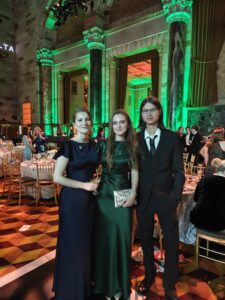
NAF Ball
Oh, yeah, there was. I took some trips. I traveled around whenever I could. I visited Chicago, New Orleans, and Nashville. I attended the NAF Ball in New York City which was great, I loved it. And besides that, I also tried to get a taste of the really American things. I attended some sports games, I tried a lot of different food, I went to art museums: I made the most of my time there.
How did you learn about this specific NAF-Heersink grant in Global Health?
When I decided on doing my internship in the US, I started looking into different funding opportunities, which is when I came across this specific grant. And as a first-generation student it really meant a lot to me to be able to do my research abroad, especially because it’s not something that I would have dreamt of 10 years ago. The global health part of this specific grant is something that also really spoke to me. It is something that I would want my research to contribute to as well, really improving the lives of mothers and their babies worldwide, in my case.
What are your plans for the future?
I want to contribute to more research in women’s health. I think it’s a field that needs more attention, and it needs more funding than it currently gets. My time in the US really confirmed that this is an area that I would love to continue my career in. So, I’m currently looking for PhD positions and hopefully that will all work out.
Any advice for students who are looking for funding or are wanting to study in the US, or are in the midst of writing an application?
I think my biggest advice would be to really believe in yourself because you’re capable of much more than you think. That has been one of the biggest takeaways for me. Also, you will never be 100% ready to apply. I think that the application process itself taught me a lot, and there will never be a period that you will feel 100% ready to step outside of your comfort zone. I think that is my biggest advice.